
Third-World Morality Is Brain-Damaged

Merry Christmas, everybody, and thank you all for pushing this Substack over the 10,000-subscriber mark! Now, back to ponerology.
Earlier this month I read two articles on Indian morality. I was immediately struck by certain familiar behaviors and traits. The passages that came to mind are those that inspired a couple of articles I wrote this past year on cultural stereotypes and frontal characteropathy. As I read on, however, the pieces all fit together.
Aside from the traits and behaviors of frontal characteropathy, so named because of the character-deforming nature of certain types of damage to the prefrontal lobes, there was also Lobaczewski’s statement that a country’s “entire psychological and moral climate” is influenced by the unique blend of types and proportions of personality disorders and dysfunctions within its population. Cultural stereotypes are thus best defined as accurate generalizations about how this pathological influence manifests in general culture. Whenever someone dismissively says, “that’s just a stereotype,” you are witnessing cognitive dissonance and a refusal to accept this basic reality. Generalizations are generally true, and stereotypes are just generalizations one does not like, as Norman Finkelstein once put it.
But the passage that made it all click was this one, to which I hadn’t previously given much thought:
In societies with highly developed medical care, we find among the upper grades of elementary school (around ages 11 to 14, when tests can already be applied), that 5 to 7 percent of children have suffered brain tissue lesions which cause certain academic or behavioral difficulties. This percentage increases with age. Modern medical care (especially obstetrics) has contributed to a quantitative decrease in such phenomena, but in certain relatively uncivilized countries and during historical times, indications of difficulties caused by such changes are and have been more frequent.
The causes of prefrontal brain dysfunction are legion: birth complications like hypoxia at birth, blunt-force trauma to the head, physical and emotional child abuse, maternal neglect, malnutrition in the womb and/or early childhood. In the notes to Ponerology, I cited Adrian Raine’s research on the subject, where he identifies even more factors that contribute to brain dysfunction and crime in general, like specific nutritional deficiencies, sugar intake, overexposure to heavy metals, poverty in general, overcrowding, and bad neighborhoods. If Lobaczewski’s numbers were even somewhat accurate, this would imply that the percentage of people with noticeable brain dysfunction in poor regions without high-quality medical care is at least 1 in 10, and probably much higher than that.
Put all this together and we approach an hypothesis: third-world or “developing” nations, including “traditional” cultures and their influence on their modern counterparts, will tend to be more characterized by the features of frontal characteropathy than first-world nations.
Recall what Lobaczewski said about the brothers of that borderline sister: It wasn’t their primitive notions of honor that caused them to defend her. It was the spellbinding effect of her psychopathology that twisted their notions of honor to the point that they were blind to the reality of her vengeful sadism and participated in her scapegoating of an innocent, gifted child. That said, the spirit of Prussian militarism probably at least prepared the ground. As Lobaczewski wrote elsewhere:
Since the common people are prone to identify with the emperor … the characteropathic material emanating from the Kaiser resulted in many Germans being progressively deprived of their ability to use their common sense. A new generation grew up with psychological deformities regarding the feeling and understanding of moral, psychological, social, and political realities. It is extremely typical that in many German families having a member who was psychologically not quite normal, it became a matter of honor to hide this fact from public opinion, and even from the awareness of close friends and relatives (even at the cost of engaging in nefarious conduct).
If that is the effect of a single leader, imagine the result of many generations of such influence. It would probably resemble an “honor”- or izzat-based system. In nations where such moralities dominate, appearances are more important than reality. Truth and accountability are foreign notions. If you’re an asshole with a large reputation, being called an asshole causes you to lose face, which you must recover by blotting out the miscreant who simply spoke the truth. As the now-famous Kiwi Farms post put it:
Izzat conflicts are not about who is right and who is wrong. It’s about who wins and who loses. This means it’s a zero-sum game where just about any action is justified (including murder) to restore the lost Izzat. Izzat is a limited social currency and the easiest way to get it is to take it from someone else. Winning is righteous in Izzat. Losing is unrighteous. This means that if someone plays the game of izzat well enough, they can get away with just about anything (murder, rape, scamming, cheating, stealing). The only morality in Izzat is the protection of your group’s collective ego. The only appropriate response when your Izzat is attacked is the complete destruction of whoever insulted it.
Two people get into an argument. They might escalate, but chances are it won’t be that bad. i.e. ‘Sorry I broke your garden gnome.’ With two Indians in an argument, the stakes are always deadly thanks to Izzat. Neither of them can back down, nor can they admit fault. Admitting fault is seen as deliberately humiliating yourself. Not only that, but because Izzat is shared, you are shaming everyone who shares your Izzat. So, admitting fault or taking responsibility for a problem is a form of social suicide. This means even if the dispute was over something completely fucking stupid or trivial (like a broken garden gnome), it could spiral into a decades long honour feud.
To put it clinically, izzat is the morality of a damaged prefrontal lobe. If poverty produces more prefrontal damage, and more prefrontal damage has a noticeable effect on morality, then poorer nations (like those in Sub-Saharan Africa and South Asia), or nations that have only recently gotten richer (like China and many Middle Eastern countries), should have moral systems that more resemble that of a frontal characteropath. Unsurprisingly, honor- or shame-based moralities correlate with the Global South, while dignity- or guilt-based morality correlates with the developed world.
Matt Forney at The Visa Files recently wrote on the difference between shame- and guilt-based moralities, adding the dimension of IQ:
Guilt is the recognition that you have done something wrong, while shame is the feeling that you are wrong. The former requires acknowledging truth, while the latter has no connection to truth and centers around public perception of yourself and those close to you. … If you do wrong in a guilt-based morality system, your own conscience (assuming you aren’t a psychopath) gnaws away at you. …
Shame-based (non-white) morality is arguably an oxymoron, as it resembles amorality more than anything. If you are driven by shame, your primary motivation is to gain public prestige, or at least avoid losing it. Immoral actions are acceptable if they personally advance you or your family and you are not caught doing them. … Being publicly embarrassed is worse than committing a crime.
Moreover, guilt requires empathy and shame does not. In guilt-based morality, you do good (and avoid doing evil) because your empathy allows you to place yourself in the positions of other people. You avoid doing things like ripping people off because you can imagine what it would be like to be ripped off and can understand why ripping someone off would hurt them. …
Albanians were traditionally governed by the Kanun, a system of tribal governance defined primarily by gjakmarrja, a custom where Albanians are socially obligated to murder anyone who attacks their family’s honor. Gjakmarrja can be triggered by something as innocuous as failing to pay someone back, and it even authorizes the murder of the offender’s family members. Blood feuds, if left unresolved, cause a loss of honor for your entire family, so you face social pressure from your family to resolve them by any means necessary. There are Albanians whose relatives got entangled in a gjakmarrja blood feud and essentially cannot leave their homes; they are seen as “in blood” and are fair targets for murder, even if they had nothing to do with the “crime” or the “crime” happened generations ago. …
If you cannot develop even the most basic theory of mind, you cannot conceive of morality beyond what is personally advantageous to you; you’re basically one step above an animal. Reminder that India has an average IQ of 76, which is one point higher than the threshold for mental retardation. Also keep in mind that statistically, one half of India’s population has an IQ lower than 76.
A year ago, Jayant Bhandari wrote a piece for American Renaissance, “India: It’s Worse Than You Think.” Bhandari grew up in central India. He traveled to Britain for his education and returned to India, as he put it, “with the idea of improving it.” However, after 11 years of effort, he “realized that India was a sinking ship, with worsening and increasingly shameless corruption, degraded people, and a society that was falling apart.” He now advises East Asian and Western corporations on investing in India:
Most of what I tell them sounds to them exaggerated, unrealistic, and unbelievable. After much dance, drama, and a great deal of lost money, they begin to believe what I tell them. However, this learning is never institutionalized because of a refusal to understand India.
Here are some excerpts where the frontal characteropathy shines through particularly clearly [with some of Lobaczewski’s descriptors in brackets]:
When I was a child growing up in India, I learned that “might makes right.” [Belligerent and brutal in word and deed.] Power was often abused, with those in control acting as if they had a God-given right to exploit and dominate others. [Egotistical belief in their own genius and superiority.] The display of authority could be so extreme that questioning it or expecting those in power to do their duty might lead to retribution. [Pathological vindictiveness.] Those in authority seemed to believe that their positions were not for serving others but for personal gain.
People who showed respect appeared to have meekly accepted a lower, subservient position. Kind people had to hide their compassion, for being nice was seen as a weakness. [Paramoralism.]
In India, I have rarely seen someone in authority take the initiative to solve a problem he was responsible for. When I was at university, an underaged boy who worked in the kitchen was raped and sodomized by the janitors. … the authorities and fellow students threatened me with severe consequences if I pursued the matter further. Devoid of empathy, they also made fun of the boy and me.
Yes, there is an element of sadism here. There is some degree of pleasure that Indians take in the pain suffered by others. The attitude of the authorities was like that of the high-placed Delhi bureaucrat who told me that his Black Label whiskey tastes so much better because he knows that most Indians can’t afford to drink it. [Consider themselves “superior” to normal people.]
This confuses Westerners. If they had power, even if they were corrupt, in a situation where there was nothing to gain or lose — no bribes to receive since both parties were poor, and no risk of offending someone well-connected — they would do the right thing and book the alleged rapist. These Indians would do nothing, not even lift a finger, unless there was a reward: money or sex. Their apathy was bottomless.
Doing your job may be seen as effeminate by those above you. If you can shirk your responsibilities, you’re considered macho. In that culture, there is rarely any pride or honor in doing what is right. If you call a plumber for repairs, he will see it as beneath him to leave without creating a mess. He may deliberately do a shoddy job, even if doing it well wouldn’t take more time. A complex web of arrogance, egotism, servility, casteism, tribalism, and magical thinking drives this behavior. He shows his contempt for you and gets the better of you by leaving a mess. His customer, as the other side of the same coin, might well look down on and exploit someone who did his job well.
Fairness, justice, trust, empathy, and impartiality are alien to many Indians. They have a hard time telling the difference between right and wrong. [Lack of insight into their own mental state.] They are indifferent even when no cost is associated with being fair. Moreover, if they could do good without any personal cost, they would still prefer not to, because that can be seen as a sign of weakness.
Street smarts are highly valued, and criminals who evade justice are celebrated. A relative of mine, brimming with pride, once told me that he would never pay rent for the house he had rented. He had bribed the local authorities to make it impossible for his landlord to throw him out. [Manipulative in a selfish and ruthless fashion.]
When someone in a society without trust is cheated, he rarely seeks justice against the cheater. Instead, he cheats others. Men abuse women, women abuse children, and children abuse animals. Animals attack whatever they can. Higher-caste Indians abuse those in lower castes, while lower-caste people fight with other lower-caste people to determine who is superior. It is a perpetual cycle of mistrust and arbitrariness. [In other words, scapegoat syndrome writ large.]
People in the West talk about a system of four or five castes that was formalized by the British. This confuses the issue, for this gives an exaggerated sense of structure. In reality, there are 1.4 billion castes in India. All interactions are about sizing you up. You end up either oppressing others or being oppressed.
Many people lie openly. Everyone knows everyone lies, but everyone lies anyway. Many Indians convince themselves of their lies so that they can no longer differentiate between fact and fiction. Even if you don’t have to or want to, you have to exaggerate and lie, for you know your listener will calibrate to what you say.
I have never (I am using the word advisedly) had a contract honored in India. When you bribe, you must do so skillfully. If you have an opposing side in a legal fight, the judge and the police will take bribes from both sides. Your lawyer will collude with the opposing side and with the judge right in front of you to maximize bribes. This might sound unbelievable, but that does not change reality.
My grandparents and father were honest in financial matters and held themselves to a high standard of self-respect — an anomaly in India. There are good, sane, moral, rational people in India, but I have more fingers than the total number of such Indians I have known; I can find that many honest Americans in one morning. By Indian standards, our family was decent and well-connected. This shielded me from much depravity and made it possible to ignore the stories that I heard.
I doubt I understood the concepts of honor and loyalty until I had lived in Britain for a year. During that time, someone told me not to exaggerate when promoting the organization I worked for. For the first time, I began to see that people wanted to speak the truth simply for the sake of truth. I had always known the word “truth,” but for the first time, I began to grasp its essence.
When we were granted unhindered access to the school in Manchester and later to the office where I worked, my fellow immigrants and I often wondered if the British were so naïve as to trust us so readily. What was to stop us from stealing everything in sight? Most immigrants never truly grasp the significance of “trust” and “gratitude.” Worse, they discover that complaining often leads to benefits — the only thing they genuinely care about in the multicultural West. Humanistic, civilizational values never touch their hearts.
This reminded me of China’s “lost generation,” who grew up during Mao’s cultural devolution. This is the generation today who will take for themselves anything that isn’t firmly bolted to the ground, e.g., the soap and toilet paper in public restrooms.
Statistics fail to resonate in the Indian psyche. There is no sense of a grey area; everything is black or white, with no appreciation for nuance. … In the end, unrestrained emotions drive life. [Instinctive and affective reactions predominate.] I carried a part of this same mindset with me. Realigning my thinking with reason, morality, and Western values was a difficult task. …
Even my privileged upbringing in India had ingrained into me layers upon layers of confused worldviews, and dishonest, scheming behavior. Despite my best intentions, shaking them off and rewiring my thinking took decades. Any erroneous belief I became aware of and tried to change clashed with other deeply ingrained beliefs and mental patterns. It was like trying to replace a broken brick in the castle of my cognitive constructs without destabilizing the entire structure. At times, I had to get drunk just to find a fleeting sense of sanity. [Here Bhandari describes a form of autopsychotherapy somewhat akin to what Lobaczewski provided for the above-mentioned brothers.]
My grandmother often said two things I once considered backward-looking, but I agree with them today. She believed that some people needed to stay on the edge of starvation because if given more, they would make problems. Despite being one of the most egalitarian people I knew — befriending her chauffeur and tailor — she would remind me that not everyone deserved a seat at the table unless he was fit for it.
“Human Rights” is a Western concept that is incomprehensible to most Indians. They fail to understand respect for the individual. Speaking to them about “rights” only leads to confusion. They fail to differentiate between “negative” and “positive” rights. For instance, when taught about property rights, they learn to protect their property but fail to recognize the rights of others. Women, when taught that rape is a violation, might begin to see it in every situation and use it as a tool to exploit men. As they are introduced to the concept of rights, they shift from accepting their wretched lives to adopting a resentful, victim mentality.
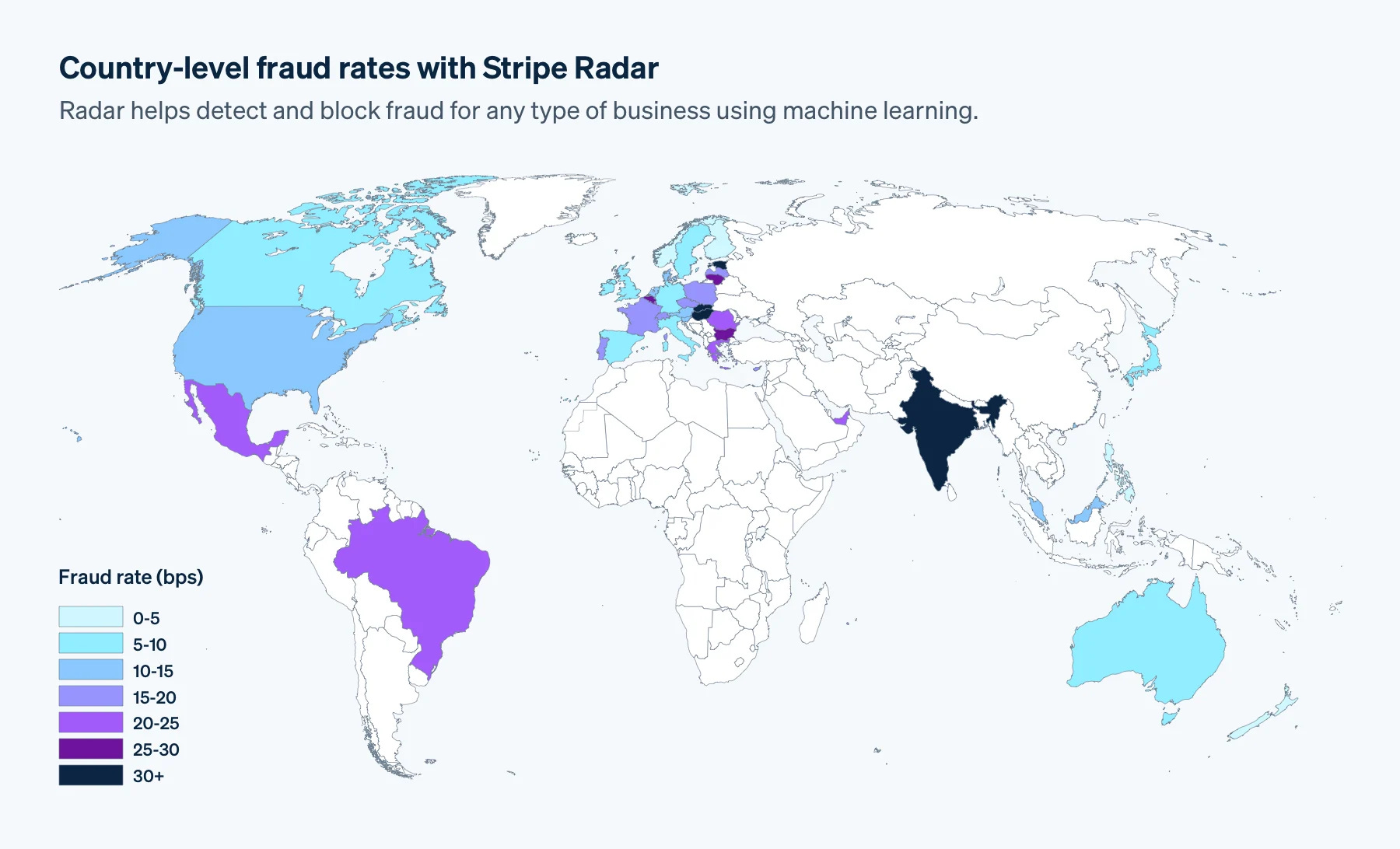
Maybe now this map will make a bit more sense.
While East Asian “face” morality is often considered more reasonable than “honor-based” morality, which is considered more aggressive and retaliatory, I would argue it is just as incompatible with actual morality and a functioning society. I asked Grok to list some of the most obnoxious examples of such behaviors. This is what it spat out, which seems fairly accurate to me:
Refusing to admit mistakes or lying outright — People often deny errors, even obvious ones, or fabricate excuses to avoid embarrassment. For instance, a manager might insist a failed project succeeded, or a service provider might claim “no problem” when there clearly is one, leading to inefficiency and frustration in workplaces or daily interactions. [In other words, this is institutionalized dissociative thinking, or “blocking, selection, and substitution of premises.” This was elevated to the macrosocial level during the Great Leap Backward.]
Excessive ostentation and wasteful spending — To “gain face,” individuals buy luxury goods, host lavish banquets, or build grand projects beyond their means, even if it causes financial ruin. Examples include ordering far more food than needed at dinners (refusing leftovers to avoid looking poor) or local officials pursuing “face-saving projects” like unnecessary extravagant infrastructure to impress superiors.
Avoiding direct criticism or confrontation — Publicly correcting someone, even constructively, causes them to lose face, so issues are ignored or handled indirectly. This can result in suppressed problems festering, such as not addressing poor performance in teams or sweeping family scandals (e.g., abuse or failure) under the rug to prevent public shame. [Recall this is what Lobaczewski observed about Germans influenced by the Kaiser’s characteropathy.]
Overreacting aggressively to perceived slights — Minor embarrassments can provoke extreme responses, like verbal outbursts or physical aggression, especially if someone feels publicly shamed. Anecdotes include lashing out violently if a partner causes embarrassment, or intense sensitivity to feedback that leads to severed relationships. [Mao’s domestic policy in a nutshell.]
Prioritizing appearance over substance or ethics — Face concerns can drive unethical actions, such as employees engaging in dishonest behavior to benefit their organization (and thus “repay” face), or hiding mental health issues/depression to avoid family shame. It also contributes to stigma around vulnerability, where seeking help is seen as losing face. [Keep this in mind whenever you read official statistics from the Chinese government.]
Hypocritical or manipulative social dynamics — Pretending to know something to avoid looking ignorant, competitive one-upmanship (e.g., buying more expensive items to outdo others), or using “face” as an excuse to manipulate outcomes, like refusing reasonable requests to not appear weak.
Over the past months, I’ve been going through Lobaczewski’s other book, Logocracy, chapter by chapter with paid subscribers. One of the points we discussed during the last session was the logocratic principle of competence. Competence is so thoroughly embedded in the Western worldview that we expect commercial drivers to have commercial driver’s licenses, and for such holders to have actually qualified to receive them. We expect our surgeons to be trained, our lawyers to have passed the bar, and even in professions where full-fledged accreditation isn’t always necessary, as in fields as diverse as coding and musicianship, we still expect them to know what they’re doing. And yet we let practically anyone vote or run for office. Lobaczewski thought this was absurd and proposed a series of tests which must be passed in order to earn such rights, tests which would end up excluding everyone with an IQ less than about 80.
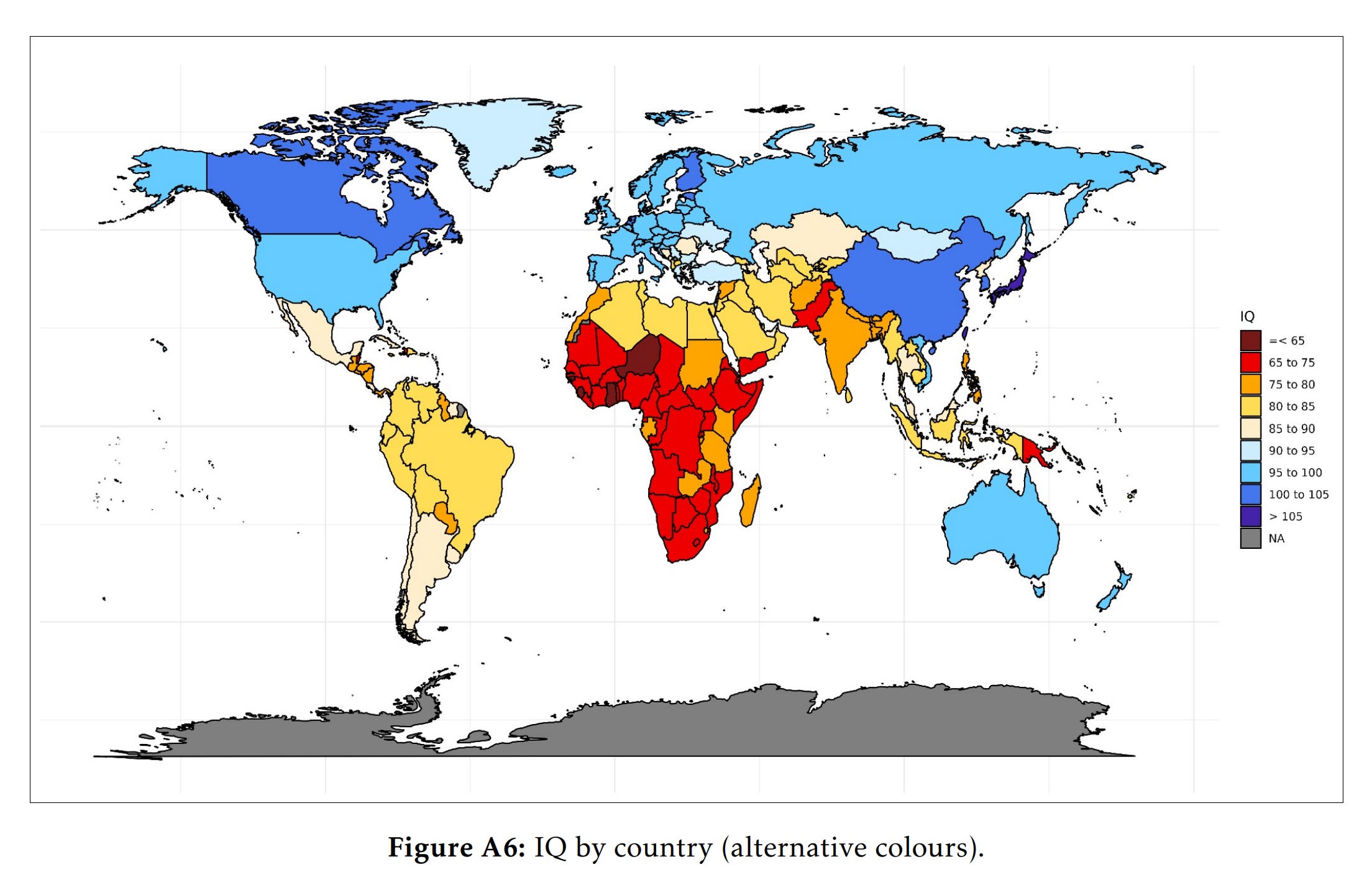
Keeping in mind that many nations in the Global South average national IQs less than 80, note the following, from Logocracy. Lobaczewski thought the eligible voting population of some Northern European countries might reach as high as 90%. “In developing countries,” which included ex-communist ones, “the number of voters would initially be much lower, but would increase as a result of the development of civilization. This, however, would protect such countries from the disease caused by introducing democracy among nations that are not ready for it.” For some developing nations, with an average IQ of around 75, the eligible voting population would be less than 40%. (Avg. IQ 65, ~10-15%; IQ 85, ~60%.)
Now, I’m not a spineless moral relativist, so I don’t think the above descriptions of foreign moralities are “just their culture.” I think the so-called moralities highlighted for inclusion above (and others that have gone unmentioned) could and should be better, and there are objective reasons for why they’re not. By extension, I am a moral colonialist. I think those who know better can and should exert influence to change worse cultures for the better. I just don’t think the traditional methods have been very effective, because they don’t target the root causes. American democracy promotion was one of the worst examples, and didn’t take the above realities into account.
To effectively target root causes and improve third-world morality would probably look very little like traditional colonialism (thought that doesn’t necessarily mean it needn’t do so). The first step would probably look like something completely unrelated: fostering adequate nutrition, heavy metal detoxification, and omega-3 supplementation. The rest would take several generations. Of course, each nation would probably be best suited to eliminate or mitigate the third-world within their own borders first, out of self-respect and as proof of concept.
Hmmm... why is it that the LEADERS in the Western world seem to have the morality of the 'Global South'???
Banger, as always, Harrison! I used to simply laugh off the shit-tier scams that Indians I knew would pull and the corresponding naivete of whites. But I never really considered it at scale.
On a somewhat related topic, have you considered somewhat the opposite problem: counter-productive and debilitating conscientiousness. This seems to be a white problem that enables ponerology. Not quite the same as pathological empathy of our women-folk, but instead holding ourselves to impossible standards of behavior while criminals run amok. I'm thinking Tolstoyian Christians, NAP Libertarians, and the like: any conceivable effort placed that inconveniences others is a crime that we cannot commit ourselves, and anybody in our own group that doesn't meet this standard of perfection is anathema.